Congressman Jeff Crank Visits RSF, Discusses One Big Beautiful Bill and Key Priorities
Colorado Springs, CO – On a recent visit to the Republican Strategy Forum (RSF), Representative Jeff Crank (R-CO5), accompanied by his assistant Ashley, delivered a robust defense of the recently passed One Big Beautiful Bill Act of 2025 (OBBB, H.R.) –1), highlighting its provisions and pushing back against what he described as alarmist rhetoric from the left. The bill, passed by Congress on Thursday and expected to be signed into law by President Donald Trump, represents a sweeping legislative package addressing energy, defense, taxes, border security, and social programs. Crank, who attended a White House event on July 4th marked by a flyover of two B2 bombers, emphasized the bill’s benefits for Colorado and the nation.
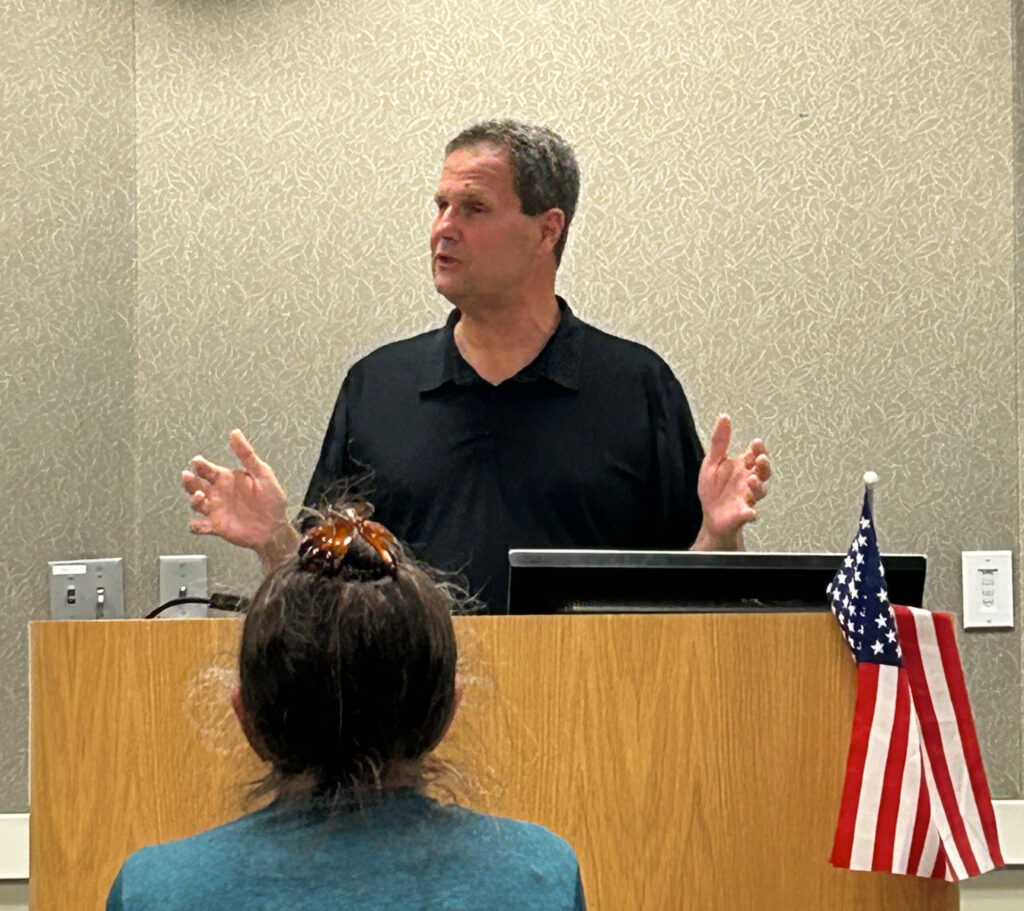
OBBB: A “Good Bill” Under Fire
Crank addressed criticism from opponents claiming the bill’s reforms, particularly to Medicaid and SNAP, would lead to dire consequences. “The left is saying, ‘People are going to die,’ but that’s just them looking for political capital,” Crank stated. He argued that the bill’s provisions are practical and fiscally responsible, designed to curb waste, fraud, and abuse while promoting energy independence, national security, and economic growth.
Energy Provisions: Balancing Fairness and Revenue
A key achievement for Crank was his role in shaping the bill’s energy provisions, particularly those affecting public lands leasing. “I worked with the Natural Resources Committee to include a provision that raises fees for renewable energy leases on federal lands, which the Biden administration had slashed by over 80%,” Crank noted. The bill aligns fees for solar and wind leases with those for oil and gas, ensuring taxpayers receive a fair return. According to Crank, this adjustment will generate an estimated $300 million for the U.S. Treasury.
The bill also phases out green energy subsidies for new solar and wind projects over several years, eliminating what Crank called inefficient incentives. “The environmental impact of fracking is much lower than sprawling solar farms,” he argued, citing the land-intensive nature of renewables. Additionally, the OBBB expands oil and gas leasing, opening drilling opportunities in the Gulf of Mexico, off the coast of California, and in Alaska’s Arctic National Wildlife Refuge (ANWR). Crank emphasized that these measures will drive down energy costs for consumers by increasing domestic production.
Medicaid and SNAP: Tackling Waste and Promoting Work
Crank highlighted the bill’s reforms to Medicaid and SNAP, aimed at reducing fraud and encouraging self-reliance. For Medicaid, the bill introduces work requirements starting in 2027 for able-bodied adults without dependents, mandating 80 hours per month of work, school, or volunteering. “This has no impact on the disabled, and no changes take effect until 2027,” Crank clarified. The bill also addresses waste by removing duplicate enrollees across states and conducting quarterly reviews against the Social Security Administration’s master death file to eliminate payments to deceased individuals. Crank cited estimates that Colorado alone paid $7.3 million in state funds and $8 million in federal funds to deceased beneficiaries, with the reforms expected to save over $1 trillion nationally.
For SNAP, the bill saves over $200 billion by implementing similar work requirements for adults aged 19–64, with exemptions for those unable to work, pregnant individuals, or those with dependents under 14. SNAP growth is tied to inflation, and eligibility is restricted to U.S. citizens. Crank noted that some provisions, such as further Medicaid restrictions, were removed due to Senate reconciliation rules requiring 60 votes.
National Defense and Border Security: Strengthening America
The OBBB significantly boosts defense spending by $150 billion, bringing the total to $1.01 trillion for FY 2026, in response to growing threats from China and Russia. “We’re at the lowest level of defense spending in years,” Crank said, noting $25 billion allocated for missile defense (“Golden Dome”), $1 billion for border security, $2.9 billion for base housing allowances, $50 million for military retention bonuses, and $100 million for childcare.
On border security, the bill allocates $175 billion for 700 miles of border wall, 900 miles of river barriers, and increased staffing, including 3,000 additional Border Patrol agents and additional officers for detention facilities. Crank praised the bill’s impact, stating, “Border crossings are down 97%, though we still have drug issues.” He highlighted NORTHCOM’s new authority to combat drug trafficking, which he believes will further strengthen border enforcement.
Tax Cuts: Supporting the Working Class
The bill makes permanent the 2017 Trump tax cuts, averting what Crank called “the largest tax increase in history.” It introduces new tax breaks, including a $25,000 non-taxable threshold for tips, $12,500 in non-taxable overtime pay for those earning $150,000 or less, and a deduction for auto loan interest on U.S.-assembled vehicles. For seniors, the first $6,000 of Social Security income is non-taxable for those earning under $150,000. “These are working-class tax cuts,” Crank emphasized, though he noted Colorado’s recent move to tax overtime as a counterpoint.
Other Priorities: Education, Firearms, and Base Protection
Crank expressed support for eliminating the Department of Education, aligning with Representative Thomas Massie, but noted that such policy changes were excluded from the reconciliation bill due to Senate rules. Similarly, a provision to regulate AI was removed, leaving it to state jurisdiction.
Crank is sponsoring a bill to eliminate the 1934 Firearm’s Act. Unfortunately, Colorado legislature has introduced a bill to tax Federal Firearms Licensees (FFLs). If Congress repeals the 1934 act, this may invalidate the state’s authority to impose such a tax.
Crank also raised concerns about encroachment on Schriever Space Force Base and the Air Force Academy’s Jacks Valley, calling for a study to protect military installations while balancing housing needs. “We need to think 50 years ahead to safeguard our bases,” he said.
Addressing State Policies and Federal Debt
Crank criticized states providing funds to undocumented immigrants in sanctuary cities, noting that a proposed penalty reducing Medicaid reimbursement from 90% to 80% was softened by the Senate. He also discussed the Department of Government Efficiency (DOGE), led by Elon Musk, which the President has identified $9 billion in rescission cuts so far, with more expected.
President Trump
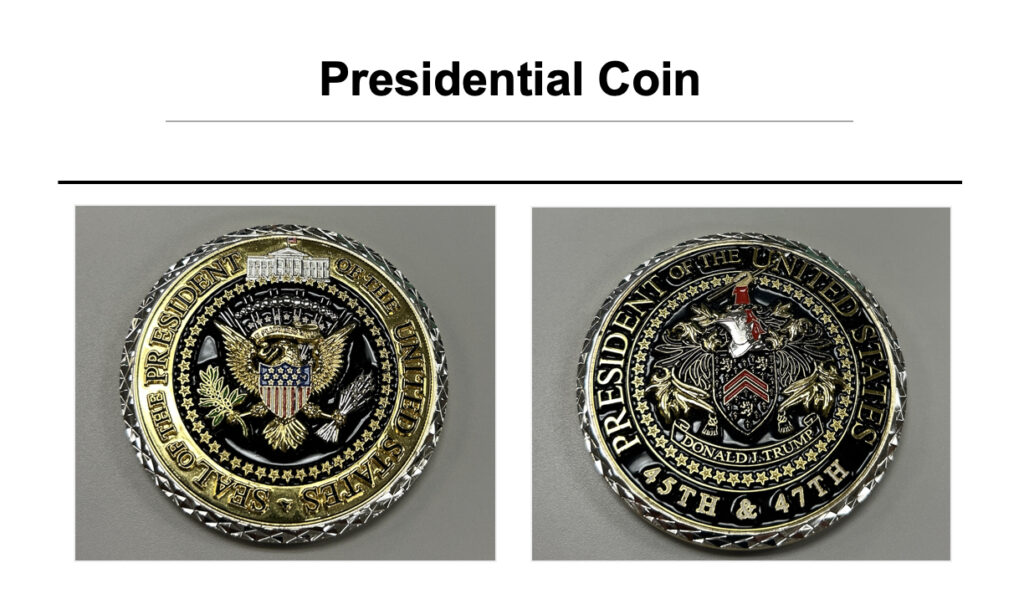
Crank was present at the signing of the bill, which was no doubt the highlight of his Congressional career so far. Crank shared the President’s Challenge coin with the RSF. Most challenge coins are typically under 1.5 inches in diameber, the President’s coin is 3 inches in diameter – Bigger and Better!
Engaging Constituents
Crank encouraged constituents to contact Colorado’s senators to question their votes on key issues and to sign up for his biweekly newsletter at crank.house.gov. He avoids in-person town halls to prevent disruptions by opponents, preferring direct communication. He also announced his attendance at the upcoming Lincoln Day Dinner with Representative Jim Jordan, where judicial executive orders and apportionment issues, including correcting the 2020 census to exclude illegals, will be discussed. When asked about election integrity, Crank recommended reaching out to Jim Jordan and the Judiciary Committee where hearings on the subject are taking place.
Looking Ahead
Crank remains focused on fixing Social Security and Medicare, defunding Planned Parenthood beyond the one-year limit allowed by the bill, and addressing census inaccuracies that he believes disadvantaged states like Florida and Texas. He praised the reconciliation process, which requires only a 50%+1 vote, for enabling the OBBB’s passage despite Democratic skepticism.
As Crank concluded his RSF visit, he reiterated his commitment to Colorado’s 5th District, emphasizing fiscal responsibility, energy independence, and national security. “This bill is a win for taxpayers, our military, and our future,” he said, urging continued engagement from his constituents.