Jessica Printice Shares Frontline Lessons in Humanitarian Education
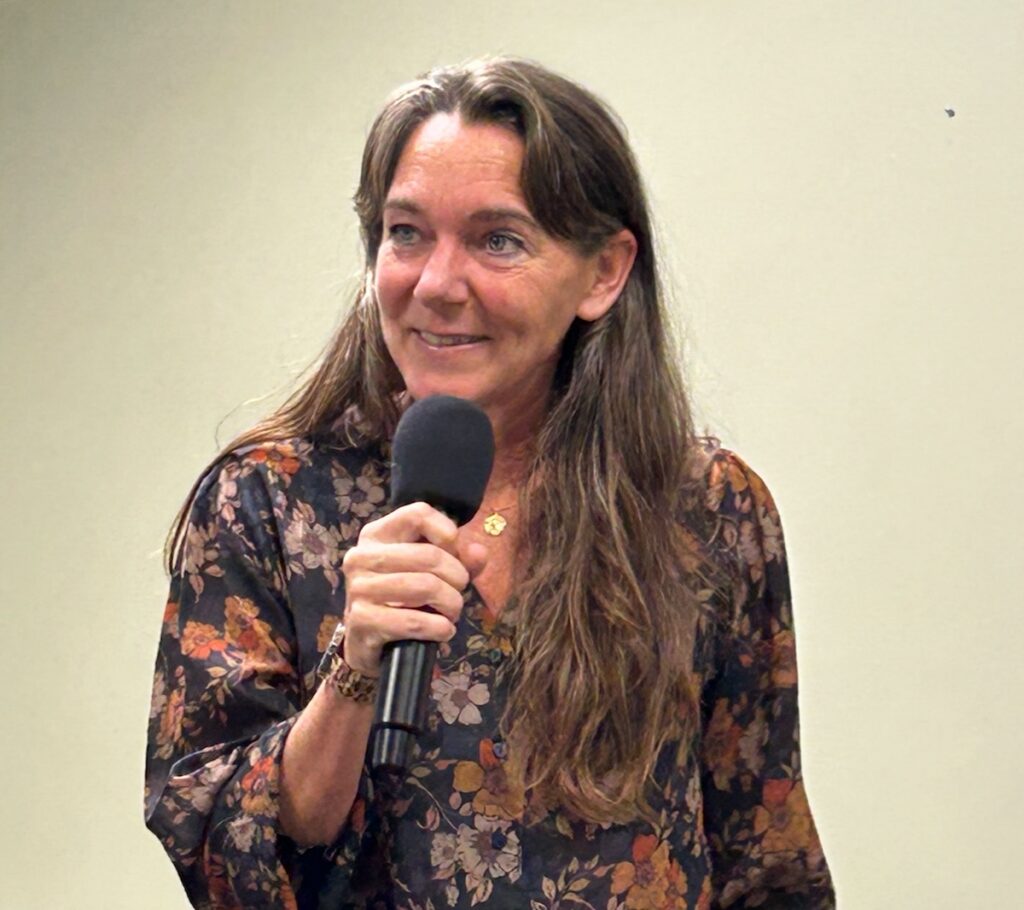
August 26, 2026 — Humanitarian worker Jessica Prentice, daughter of Paul Prentice, addressed the Republican Strategy Forum on the critical role of education in crisis zones, drawing from nearly two decades of experience across conflict and disaster areas.
Prentice, who recently completed work in Spain and is preparing to deploy to Venezuela following the recent earthquake, has spent her career focused on education in emergency settings. She began her humanitarian work in Germany before moving to Spain, drawn by its surfing culture. Over the years, she has worked seven years in the Middle East and three years in Ukraine, often in regions affected by earthquakes or war.
Hardware and Software of Education
Prentice described her work as having two main components: “hardware” — building schools, hiring teachers, and enrolling students — and “software” — teacher training and creating conditions where both students and teachers can succeed despite limited prior knowledge.
Her longest posting was in the Kurdistan region of northern Iraq. Following the 2014 genocide carried out by ISIS, which killed tens of thousands and kidnapped thousands of women and children (with roughly 3,000 still unaccounted for), she helped establish refugee camps that remain in use more than a decade later. UNICEF set up temporary schools in these camps, while the Iraqi government remained responsible for paying teachers.
The Importance of Dignity in Camp Design
One of the most striking insights Prentice shared came from an informal study comparing two camp layouts used by the UN. In one model, ten tents (housing five families) shared a single container for bathrooms and kitchens. Residents showed little ownership, and facilities quickly deteriorated. In the second model, four tents (two families) shared a small hut with private bathroom and kitchen facilities. Families took pride in their space, maintained the facilities, planted gardens, and showed better mental health outcomes. Children in these smaller units performed better in school.
“People need more than survival,” Prentice noted. “They need dignity and a sense of agency to begin healing.”
She emphasized that education in displacement settings must address trauma. In the Kurdistan camps, her team created child-safe spaces and provided teacher training focused on trauma-informed practices. After five years, operations were handed over to local organizations.
Ukraine and the Reality of Displacement
Prentice later worked in Ukraine with a larger organization before moving to a smaller NGO. Unlike the camp-based response in Iraq, most displaced Ukrainians stayed with family or friends. Schools required not only classrooms but also bomb shelters. She described working in a “failing state” context, where government structures remained but were severely strained. Prentice also noted how difficult it is to work with government-funded relief programs, compared with privately-funded ones.
Teachers underwent a full year of trauma training before receiving education-specific instruction. Prentice also noted the language challenges, relying on translators while picking up some Kurdish and having studied Russian earlier in life.
Looking Ahead to Venezuela
Prentice is scheduled to travel to Venezuela in October to support earthquake-affected communities through school reconstruction and teacher training. She has worked primarily with Friends of Waldorf Education, an organization known for its trauma-informed approach, and has previously collaborated with a French NGO linked to World Vision.
Throughout her remarks, Prentice stressed that education is no longer viewed as a secondary need in humanitarian responses. Safe learning spaces, teacher support, and attention to trauma are now recognized as essential for building resilience in children displaced by war or natural disaster.
Her presentation offered the RSF attendees a grounded perspective on the practical challenges and human realities of delivering education in some of the world’s most difficult environments.