Janna Blanter Shares Her Experiences Growing Up in the USSR
On April 29th, Janna Blanter captivated the audience at the Republican Strategy Forum with her compelling personal narrative of growing up in the totalitarian state of the USSR. As a member of Young Voices of America, Blanter is known for her engagements with high school students, instilling in them the importance of understanding history and the implications of governance.
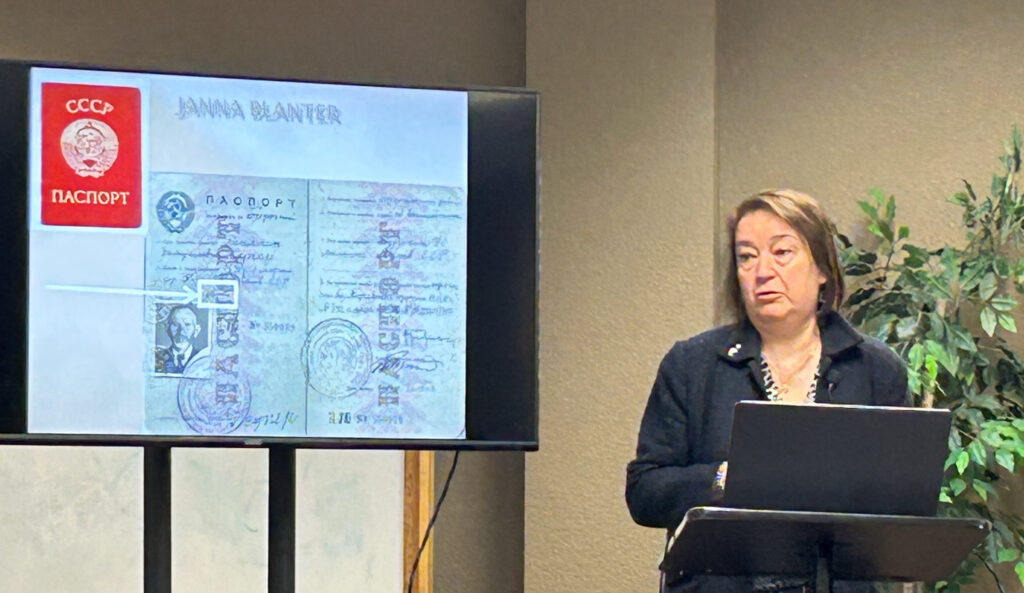
Blanter began her presentation with a short history lesson, detailing how Joseph Stalin rose to power after the death of Vladimir Lenin in 1924, ultimately ruling the USSR until his death in 1956. She highlighted Lenin’s admiration for the foundational ideologues of Marxism-Leninism: Karl Marx, Friedrich Engels, and himself. Under Lenin’s leadership, the confiscation of private property, especially farmland, resulted in empty grocery stores and significant food shortages.
As the discussion progressed, Blanter noted the dissolution of the Soviet Union in 1991, a significant turning point that reshaped the global landscape. Born in Moscow, she recounted how a child in the USSR was considered a ward of their parents until they reached the age of 16, rather than a citizen in their own right.
Her upbringing in Moscow was marked by the stark realities of the 1920s housing crisis, during which wealthy families vacated the city, leading to the conversion of their spacious homes into accommodations for multiple families. Blanter’s own family shared a bedroom in one such residence. Her father, a talented inventor, created an instrument to prevent cranes from tipping under heavy loads, but he tragically passed away during her childhood. Her mother, a dentist for affluent clients associated with the Arcade Party Store, managed to leverage her position to access a grocery store reserved for high-ranking officials—located in a historically significant area near Red Square.
Blanter recalled her introduction to English in the 5th grade, a consequence of the unavailability of French and German classes. She began thinking in English in her early twenties, a feat her mother never achieved. An intriguing aspect of her identity as a Jewish citizen was that her passport would label her as “Jew,” reflecting the oppressive nature of the USSR where movement was heavily restricted, requiring official permission for relocation.
The narrative took a poignant turn as Blanter described how her mother sought to escape the confines of their Soviet life. After the failure of collective farming in 1973, the regime struck a deal to procure wheat from America. This period also saw the Jackson-Vanik amendment, which facilitated the reunification of Jewish families scattered during Lenin’s rule. Her mother’s name was smuggled to Israel, leading to a formal invitation and the subsequent payment of five years’ salary to secure their exit. The transition included a stay in Italy for screening prior to their arrival in America, where green cards were issued at JFK airport.
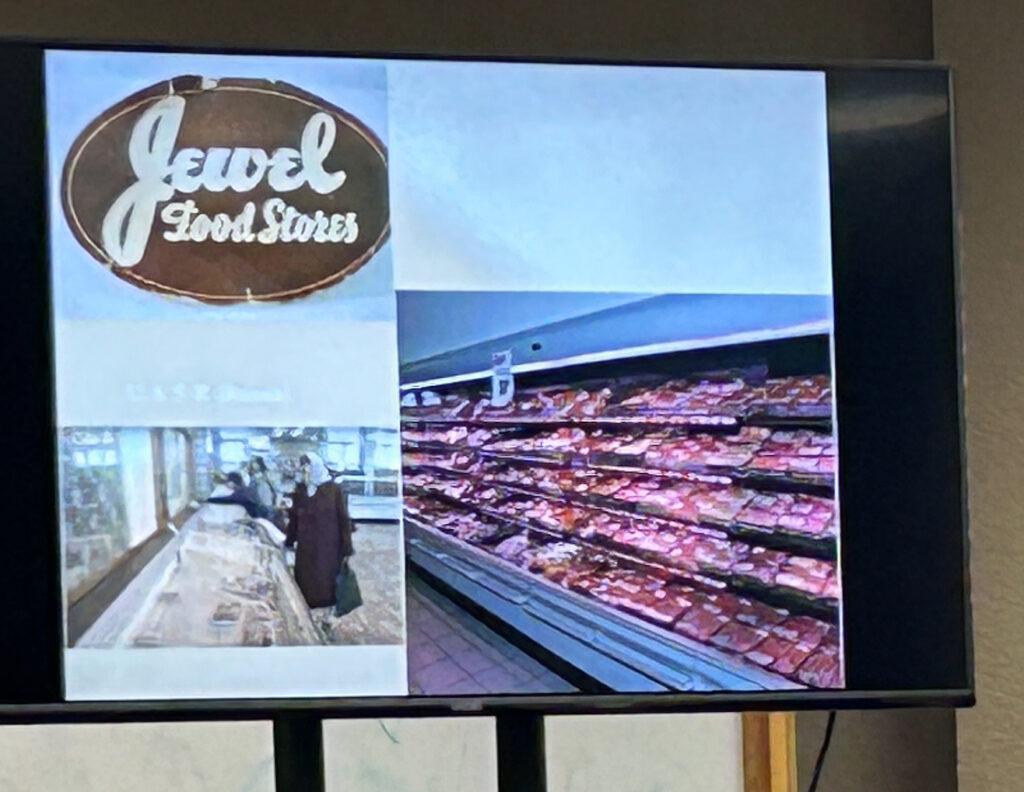
On June 30, 1976, Blanter and her mother made their departure from O’Hare Airport, their first stop being a grocery store—an experience that underscored the stark contrast to their past in the USSR. She humorously mentioned that in 1989, Boris Yeltsin visited the same Houston store, highlighting the evolution of Russian-American relations. This photo depicts the stark differences between a grocery store in USSR and America.
Years later, in 2014, Blanter returned to Moscow for an internal audit with her company, being the only CPA fluent in Russian. She pointed out the irony of a Karl Marx statue watching over the Four Seasons Hotel, symbolizing the contradictions of the current regime. She discussed the legacy of gulags and how fear continues to be a tool for the reigning authorities, echoing Marx’s statement, “Religion is the opium of the masses,” and commenting on the regime’s superficial claims of religious freedom.
To communicate its narrative, the Soviet regime established newsstands on every corner, with key broadcasts at 8:00 PM, meticulously controlling acceptable discourse. However, voices from organizations like Voice of America pierced the information bubble, providing much-needed external perspectives.
Blanter also shared glimpses of Western culture that subtly infiltrated Soviet society, including films like “The Grapes of Wrath,” which illuminated the stark differences in living conditions, suggesting that even impoverished Americans had access to cars—something most Russians lacked.
Having settled in Colorado in 2002, Janna Blanter’s experiences not only provide insight into the Soviet era but also serve as a reminder of the values of freedom and individual rights, shaping her philosophy as she continues to engage with younger generations. Her story underlines the importance of historical context in understanding the present and advocating for the preservation of liberty in all forms of governance.